


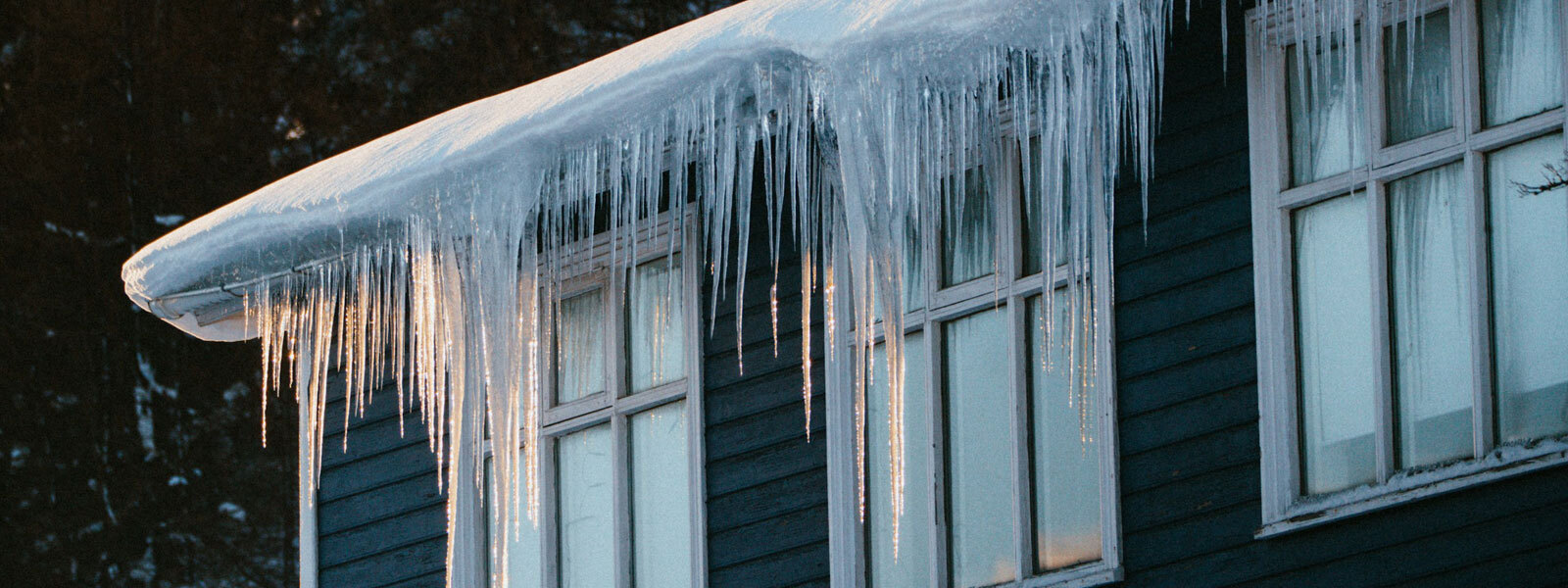
10 Feb - Ice Dam Removal in South Shore MA: What Homeowners Need to Know
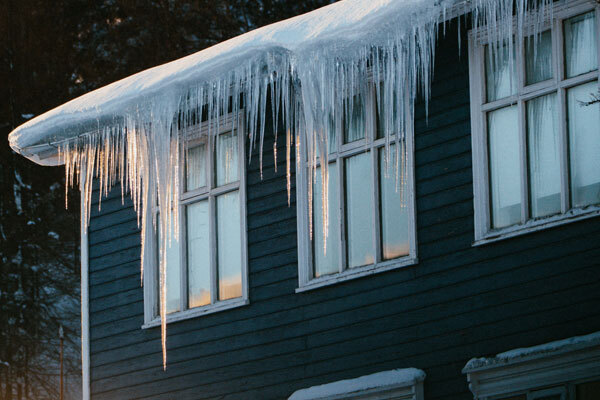 Winter on the South Shore of Massachusetts brings beautiful coastal snowfalls, but it can also create one of the most damaging cold weather roofing issues homeowners face: ice dams. While they may start as a small line of ice along the edge of your roof, ice dams can quickly lead to roof leaks, insulation damage, mold growth, and costly structural repairs if they are not addressed quickly.
For South Shore homeowners, where coastal moisture, fluctuating temperatures, and heavy snow accumulation are common, ice dam prevention and removal should be part of every winter home maintenance plan. Many homes across Massachusetts experience multiple freeze and thaw cycles in a single season, which dramatically increases the likelihood of ice dam formation compared to more consistently cold climates.
At J. McSharry & Sons, winter protection is something we think about year-round. Whether you are planning a renovation, addition, or new build, our team considers cold weather durability and long-term performance for every project. You can explore our full range of home construction and renovation capabilities on our services page, where we outline how we approach home performance, structural integrity, and long-term home protection across all seasons.
What Is an Ice Dam?
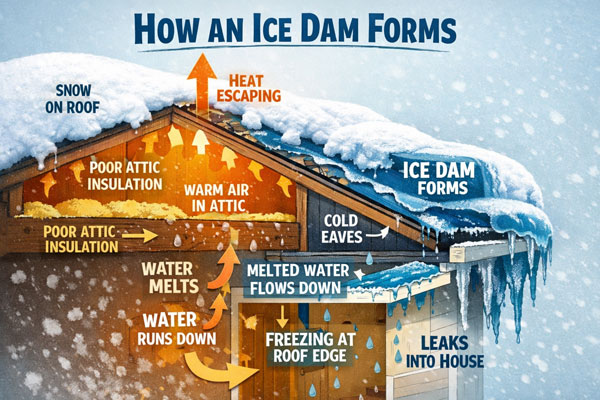 An ice dam is a ridge of ice that forms along the edge of a roof and prevents melting snow from properly draining off. Instead of flowing into gutters and away from your home, the trapped water backs up underneath shingles and can leak into your attic, ceilings, and walls.
Ice dams typically form through a repeating cycle. Snow accumulates across the roof surface after a storm. Heat escaping from the home warms sections of the roof, especially near attic living spaces. That warmth causes snow to melt. The melted water flows downward toward colder roof edges and overhangs. At the colder edges, the water refreezes and begins building a ridge of ice. As this process continues, the ridge grows thicker and traps more water behind it.
Even small temperature differences across a roof can trigger this process. Homes with uneven insulation, air leaks, or inconsistent attic ventilation are especially prone to ice dam formation.
Homeowners who want a deeper technical breakdown of ice dam formation can review guidance from the National Weather Service on ice dams and how they can be prevented.
Why Ice Dam Removal Is So Important
Many homeowners assume ice dams are simply a winter nuisance or cosmetic issue. In reality, they can cause serious and long-lasting damage that is often hidden until it becomes expensive to repair.
Prevent Interior Water Damage
Once water gets underneath shingles, it can soak roof decking, insulation, drywall, and framing materials. Because this damage often happens slowly, homeowners may not notice it until stains appear or drywall begins to soften or sag.
Over time this can lead to interior ceiling staining, peeling paint, insulation performance loss, and even electrical hazards if water reaches wiring systems.
Reduce Mold and Moisture Issues
Moisture trapped in attic spaces and wall cavities creates ideal conditions for mold growth. Mold can begin forming within days in damp environments, especially in enclosed attic spaces with limited airflow. Mold remediation can be significantly more expensive than early ice dam removal and prevention improvements.
Protect Roof Lifespan
Repeated freeze and thaw cycles can loosen shingles, damage flashing, and shorten the life of your roofing system. Even if leaks are not immediately visible, underlying roof components may already be compromised.
Find additional homeowner ice dam safety and prevention guidance available from FEMA.
Why Ice Dams Are Common in Coastal Massachusetts
South Shore homes are especially vulnerable due to a combination of environmental and structural factors unique to coastal Massachusetts.
Coastal humidity increases the moisture content of snow, making it heavier and more likely to compact and refreeze. Nor'easter storms often produce heavy, wet snow that sits on roofs longer than lighter powder snow. Many South Shore homes were built decades ago and may not meet modern insulation and ventilation standards. Temperature swings between daytime sun exposure and overnight freezing accelerate the freeze and thaw cycle.
For example, homes in Weymouth, Hingham, Scituate, Norwell, Hanover, and Marshfield often experience multiple ice dam cycles during a single winter season, especially during winters with frequent storm patterns. Here’s an excellent ice dam guide from the Massachusetts Department of Energy Resources.
How Proper Planning and Construction Helps Prevent Ice Dams
Preventing ice dams often starts long before winter arrives. During the planning and construction phase of a home or addition project, proper insulation installation, ventilation strategy, and air sealing can dramatically reduce the likelihood of ice dam formation.
When we plan and build homes, we take into account real world Massachusetts winter conditions. That includes building roof assemblies that promote consistent roof temperatures, minimizing heat loss into attic spaces, and ensuring proper airflow that helps prevent snow melt refreezing at roof edges. This is a major consideration during our custom home planning and construction process, which you can learn more about on our home building page, where we outline how performance focused construction helps protect homes from seasonal weather extremes.
These same principles apply to renovations and additions as well, especially when updating older homes that were built before modern energy standards existed.
Warning Signs You May Already Have an Ice Dam
Ice dams often form before homeowners realize there is a problem. Watching for early warning signs can help you act before interior damage occurs.
Look for large icicles forming along roof edges, ice buildup inside gutters or downspouts, water stains on interior ceilings, peeling paint near roof lines, damp attic insulation, or musty attic odors after storms.
If you see these signs, professional removal is strongly recommended. Attempting to chip or break ice off the roof can damage shingles and protective roofing layers.
Professional Ice Dam Removal vs DIY Methods
Professional ice dam removal typically uses low pressure steam systems designed to safely melt ice without damaging roofing materials. This method allows technicians to create channels for trapped water to drain safely off the roof.
DIY methods such as roof raking can help reduce snow load after storms, but they rarely solve an active ice dam once it has formed. Chemical ice melt products can also stain roofing materials and potentially damage landscaping below roof edges.
Additional professional perspective on safe removal methods is available from This Old House.
Protect Your Home Against Ice Dams in South Shore MA This Winter
Ice dams are more than just a winter inconvenience. They are a serious threat to your roof system, insulation performance, and interior living spaces. Addressing ice dams early can prevent major repair costs and help extend the lifespan of your roofing system.
Many of the homes we build and renovate across the South Shore incorporate insulation, ventilation, and weather protection improvements that help minimize winter related risks like ice dams. You can see examples of these projects and the types of homes we work on by visiting our our work page, which highlights projects across the South Shore and surrounding communities.
If you are concerned about ice dams, winter roof performance, or planning a project that improves long term home durability, you can request a consultation or project quote directly through our contact page, and our team will be happy to help you evaluate next steps. If you are interested in learning more about protecting and improving your home year round, we regularly share homeowner education articles and seasonal maintenance guidance in our insights area, where we cover topics ranging from remodeling planning to seasonal home maintenance best practices.