


05 Feb - How Ice Dams Form
The Science Behind How Ice Dams Form
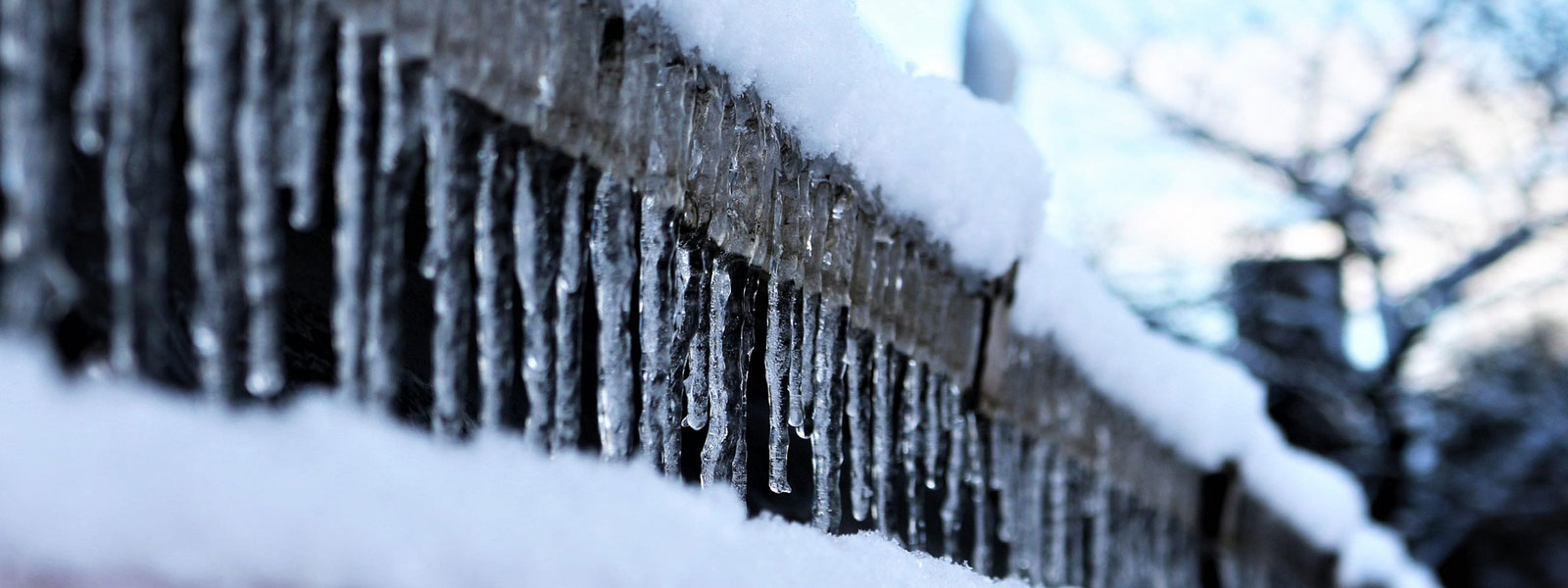
During the winter months, many homeowners notice large icicles forming along roof edges or thick ridges of ice building up in gutters and eaves. While these may look like a normal part of cold weather, they are often a sign of a much larger issue happening on your roof.
 Ice dams can lead to roof leaks, interior water damage, insulation problems, and expensive repairs if they are not addressed properly. Understanding how ice dams form is the first step toward preventing them and protecting your home during harsh winter conditions.
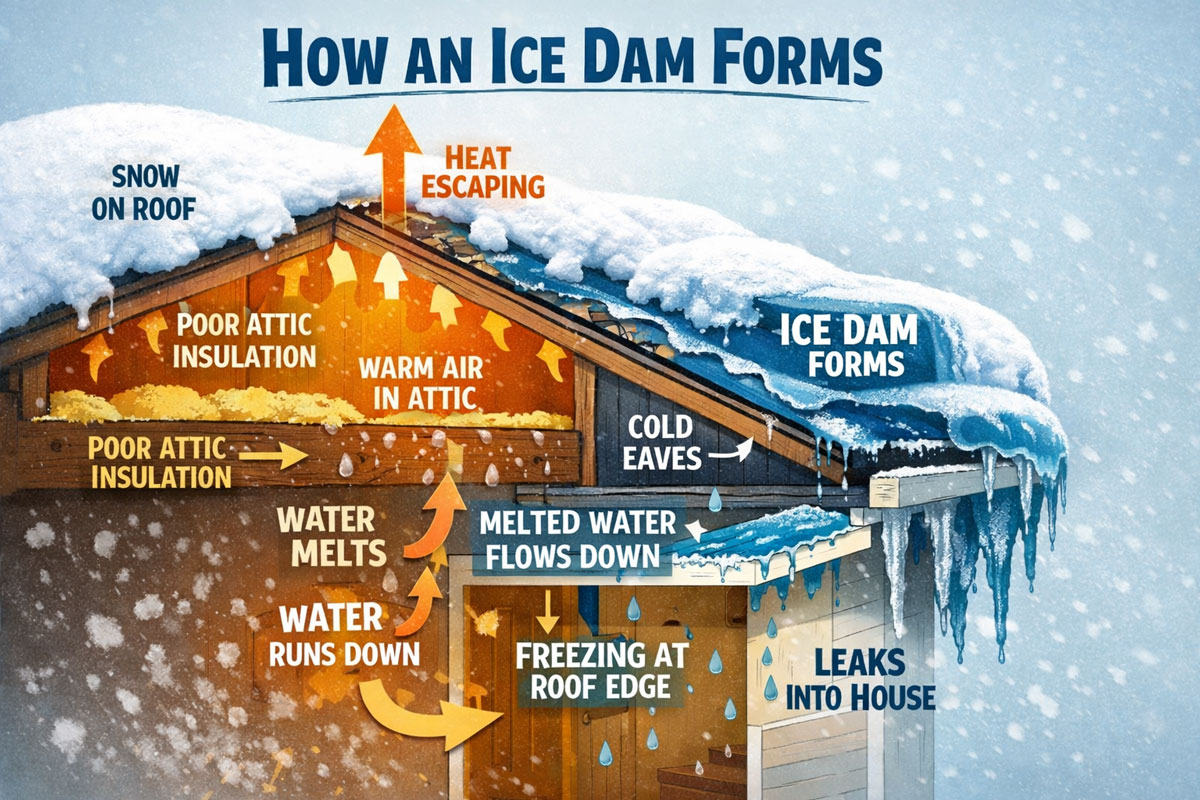
Ice dams develop when heat from inside your home escapes into the attic and warms the roof surface unevenly. When this happens, snow sitting on the upper sections of the roof begins to melt, even when outdoor temperatures are still below freezing.
As that melted water runs down toward the roof edge, it reaches colder areas near the eaves and refreezes, slowly forming a ridge of ice. Over time, that ridge grows thicker and can trap additional meltwater behind it, creating the conditions that often lead to roof leaks and interior moisture damage.
The Temperature Imbalance That Starts the Problem
According to research shared by the University of Minnesota Extension, ice dams typically form when snow is present while parts of the roof are above freezing and other areas remain below freezing. This creates the perfect conditions for melt and refreeze cycles to repeat and build up over time.
Once that ice ridge forms, it acts like a barrier. New meltwater from higher on the roof gets trapped behind it instead of draining safely off the roof.
Why Ice Dams Lead to Interior Water Damage
When water becomes trapped behind an ice dam, it can work its way underneath shingles and into the roof system. From there, moisture can soak insulation, stain ceilings, and create conditions for mold growth or long term structural deterioration if not addressed quickly.
Many ice dam issues trace back to heat loss and air leakage from the living space into the attic. The U.S. Department of Energy notes that properly sealing attic air leaks and improving insulation levels are some of the most effective ways to reduce heat loss and maintain consistent roof temperatures.
Long Term Prevention Starts in the Attic
While removing roof snow can help in the short term, long term prevention usually requires improving attic insulation, sealing air gaps, and ensuring proper ventilation so outside air can keep roof surfaces consistently cold.
FEMA also recommends proactive winter maintenance and insulation improvements as key steps homeowners can take to reduce the risk of ice dam related water damage.
Understanding how ice dams form is the first step toward preventing them. With the right combination of insulation, air sealing, and ventilation, most homes can significantly reduce the risk of ice dam formation and the costly damage that often follows.
Your Home Defense Starts Here
For more homeowner protection tips, seasonal maintenance guidance to prepare for all seasons, and other home improvement insights, visit our Insights area where we regularly publish new educational content for homeowners.
If you live in Massachusetts and are dealing with ice dam concerns, planning a home renovation, building a new home, or looking for information on other home improvement services, feel free to contact us with details about your project and our team would be happy to help evaluate next steps and solutions.